
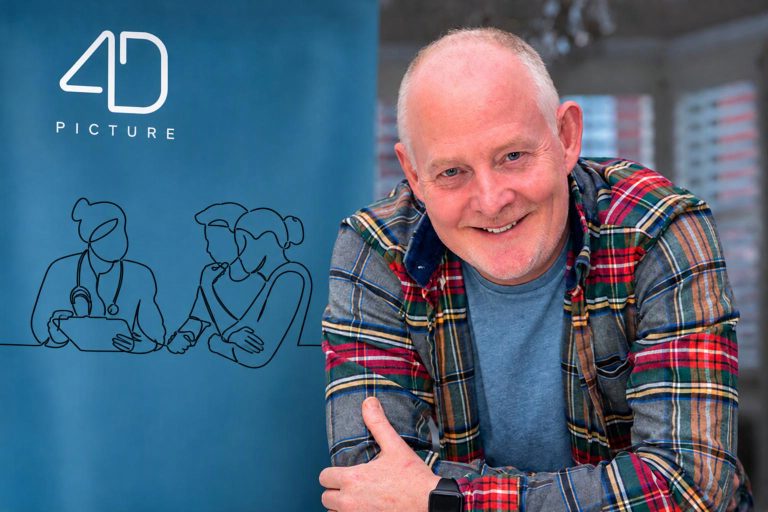
My reflections as a Stage IV melanoma patient and contributor to the European 4D PICTURE Project.
When researchers talk about clinical research, they often discuss evidence, data, methodology, and outcomes.
As patients, we may see something very different.
We see hope, uncertainty, opportunity, and sometimes risk.
Having lived with melanoma since 2013, progressing through Stage I, Stage III, and eventually Stage IV, I have experienced major surgery, immunotherapy, recurrence, and significant treatment side effects.
I have also witnessed the extraordinary progress made in cancer treatment.
Much of that progress has been possible because patients before me agreed to participate in research, often without knowing whether they would personally benefit.
For me, clinical research represents hope for the future. But it must never lose sight of the person behind the diagnosis.
We are not simply statistics. We are people with families, ambitions, fears, and lives we want to continue living.
Why Should Patients Take Part?
There are many reasons to participate in clinical research.
Some patients may hope to access new treatments or improve their own outcomes. Others may want to help researchers understand side effects, improve quality of life, or develop better ways of delivering care.
For me, one of the strongest motivations is the opportunity to help someone I may never meet.
The immunotherapy treatments I have received exist because researchers, clinicians, and patients worked together.
I am benefiting from the contributions of people who came before me.
Perhaps participating in research is one way of saying thank you, while helping those who will follow.
Of course, participation must always be voluntary, informed, and free from pressure. Not every study offers a direct benefit, and patients should feel equally comfortable saying no.
Research is not simply about developing new drugs.
It also involves improving communication, understanding the emotional impact of illness, managing treatment side effects, and helping patients make informed decisions.
Why Research Matters to Me?
Several areas are particularly important to me.
- Cancer treatment and quality of life remain important priorities for me, and having experienced the benefits and complications of immunotherapy, I want research to improve survival while reducing the physical and emotional consequences of treatment.
- Living with cancer where a scan showing no measurable disease is wonderful news, but it does not necessarily remove anxiety, fatigue or the long-term effects of treatment. Research must consider how well we live, not simply how long.
- Shared decision-making is especially relevant to my involvement with the 4D PICTURE Project. Patients need to understand their treatment options and feel confident discussing what matters most to them. A treatment decision should not be based solely on clinical evidence. It should also reflect the patient’s values, priorities, and personal circumstances. I believe patients should be involved in shaping research from the beginning, identifying questions that genuinely matter to those living with the condition.
Our lived experience is knowledge that deserves recognition.
Would I Participate in Research?
My answer is yes, but not unconditionally.
I would want to understand the purpose of the research, what participation involved, the potential risks and benefits, and how the findings might improve care.
I would also consider the practical demands, particularly when managing treatment, fatigue and hospital appointments.
My motivation would not necessarily be personal benefit.
It would be the opportunity to use my experiences to make somebody else’s journey a little easier.
Having lived through several stages of melanoma, I believe I have something valuable to contribute.
Not because I am a medical expert, but because I understand what it feels like to live with cancer.
What I Expect from Researchers
If I agreed to participate, I would expect honesty, respect, clear communication and genuine involvement.
I would want researchers to explain their objectives in understandable language, acknowledge uncertainties and treat me as an individual rather than simply another research subject.
I would expect my privacy to be protected, my consent to be respected and my wellbeing to remain a priority.
Most importantly, I would want to know that my contribution mattered.
If patients help shape research, they should understand how their feedback has influenced decisions.
And when research concludes, I believe participants deserve to hear what was learned, even if the findings are disappointing.
Too often, patients contribute their time and experiences without ever discovering what happened afterwards.
Research should be a partnership built on trust, not simply a process of collecting information.
The Importance of Shared Decision-Making
My involvement with the European 4D PICTURE Project has strengthened my belief in the importance of shared decision-making.
Over the years, I have faced difficult choices about surgery, immunotherapy, treatment risks and quality of life.
Those decisions involved much more than medical statistics. They involved my hopes, fears, relationships and what I wanted from life.
The principles of shared decision-making should apply not only to treatment consultations but also to clinical research.
Patients should have opportunities to influence the questions being asked, how studies are designed and how findings are communicated.
We should be partners in research, not simply participants.
Clinical Research is About People
I am enormously grateful to the patients who participated in research that helped make my own treatments possible.
Would I take part in clinical research? Absolutely, provided I understood what was involved and believed it had genuine value.
Would I expect to benefit personally? Not necessarily.
Would I hope to make a difference? Without question.
Because ultimately, clinical research is not just about data, publications or scientific discovery.
It is about people, their lives and their futures.
The best research is not simply carried out on patients or for patients.
It is carried out with patients.
And that is how we build healthcare that is more effective, compassionate and genuinely patient-centered.
One Life … LOVE IT … LIVE IT